
Non-Functioning Occipital Nerve Stimulator?
Real Hope and a Hardware-Free Alternative
If you have a non-functioning occipital nerve stimulator implanted for occipital neuralgia (ON), chronic daily headache (CDH), or new daily persistent headache (NDPH) — or were offered one you decided against — you are not alone. Many patients first try medications, injections, and other classic therapies only to feel let down, then turn to a stimulator hoping for better results, only to watch the relief slip away over time.
How They Work
Nerve Decompression Surgery
(Dr. Carlton Perry’s approach)
This procedure directly addresses the mechanical root cause: inflammation and scar tissue that compress or entrap the occipital nerves, restricting blood flow (ischemia). The surgeon carefully releases the entrapped nerves and surrounding tissue without cutting the nerves themselves. This allows the nerves to revascularize—restoring normal oxygen and nutrient supply—so the ischemic pain signaling can quiet down naturally. It is a one-time, hardware-free surgery.
Peripheral Nerve Stimulation (PNS) / Occipital Nerve Stimulation (ONS)
Neuromodulation
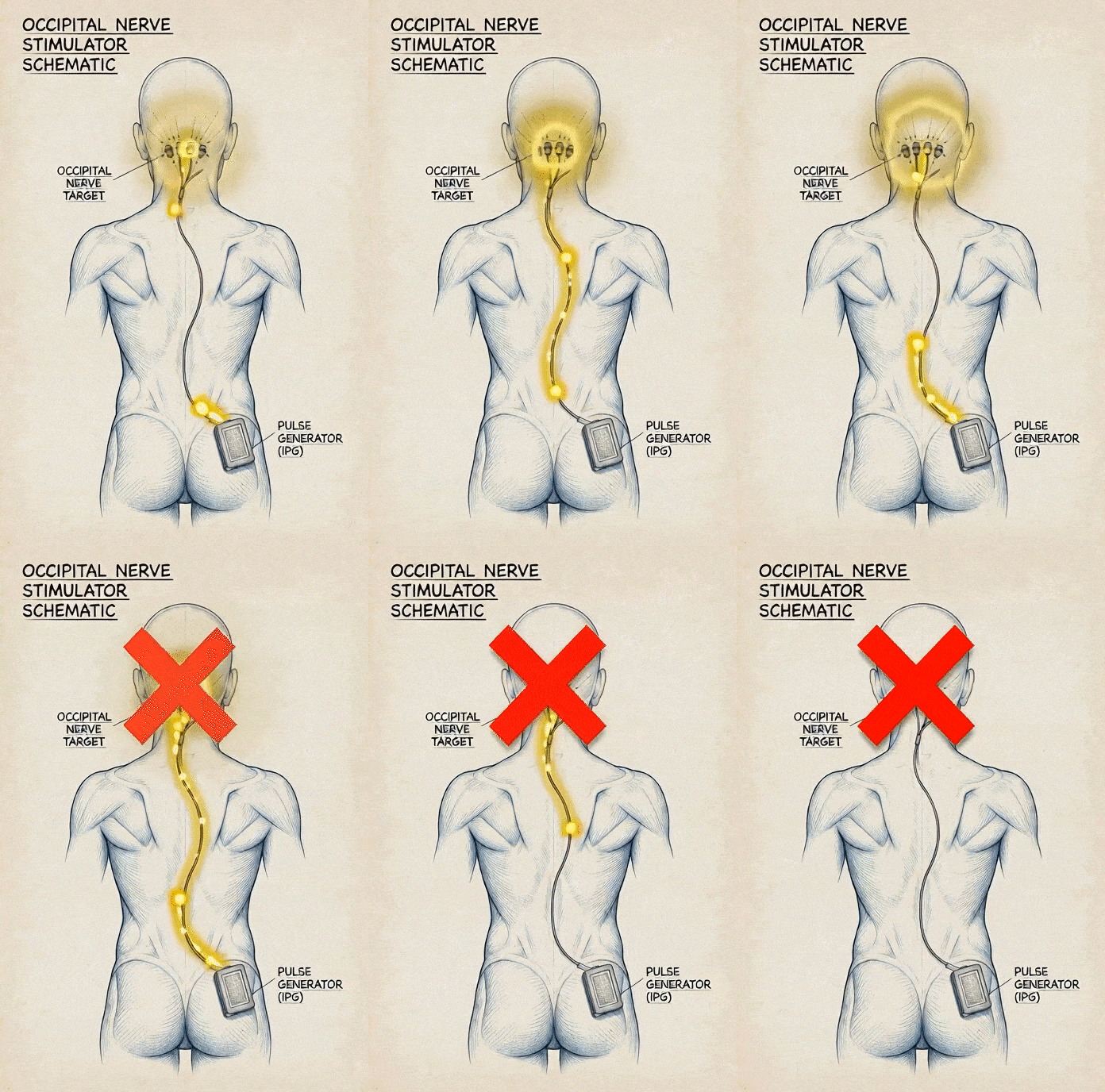
This involves implanting electrodes near the occipital nerves connected to a pulse generator. The device delivers electrical impulses that interfere with or “mask” pain signals traveling to the brain. It does not fix the underlying compression or restore blood flow—it modulates the signals after they are generated. Some systems allow a temporary trial before a permanent implant.
Ready to Take the Next Step?
Start the Free Pain Survey or call our office at 713.522.8228 to learn more. Patients have come from all 50 states and 12 foreign countries for this evaluation.
Where you go for nerve decompression surgery first truly matters — Dr. Carlton Perry does not cut nerves and performs immediate reconstruction if needed during the procedure.
Call our Houston office at 713-522-8228. We’re happy to answer your questions and help you figure out if this could be the right path for you.
Key Differences
Mechanism
Surgical Decompression treats the cause by releasing compression and restoring blood flow.
Neuromodulation treats the symptom by overriding pain signals electrically.
Hardware
Surgical Decompression is permanent and implant-free.
Neuromodulation usually requires a device (leads, battery/generator) that may need maintenance, replacement, or eventual removal.
Durability
Surgical Decompression aims for longer-term or durable relief by fixing the problem at the source.
Neuromodulation often provides good initial relief, but many patients experience fading efficacy over time. This fading is probably due to the progressive nature of the disease process, ongoing inflammatory tissue accumulation which causes more and more compression of more and more nerves, implanted device issues, and habituation.
Invasiveness and Maintenance
Surgical Decompression is a single surgery with typical recovery in weeks.
Neuromodulation involves implantation (and possible revisions) plus ongoing device management (battery changes, adjustments).
The proprietary pain survey, for head and neck pain is an industry leading game-changer in determining if our breakthrough pain relief procedures are right for your specific case.
Potential Benefits and Drawbacks
Decompression Surgery Benefits:
- Addresses the mechanical compression and ischemia directly.
- No implanted device, no battery replacements, no risk of lead migration, erosion, or infection from hardware.
- Nerve-preserving technique (does not cut nerves; immediate reconstruction if damage is present).
- Potential for more sustained relief once blood flow is restored.
Neuromodulation Benefits:
- Can sometimes be trialed temporarily before committing to a permanent implant.
- Less destructive than older ablative procedures (like nerve cutting or various types of ablation procedures).
- May help patients who are not good surgical candidates or who prefer a reversible option initially.
Decompression Drawbacks:
- Requires a skilled surgeon experienced in peripheral nerve work.
- Not everyone is a candidate (proper evaluation is essential).
- Surgical risks exist (as with any procedure), though the nerve-sparing approach helps minimize certain complications.
Neuromodulation Drawbacks:
- Does not resolve the underlying compression or ischemia, so pain can return or worsen over time.
- Common issues include lead migration, skin erosion, infection, battery depletion, and loss of efficacy.
- Many patients eventually need additional procedures or device removal.
Decompression Surgery Benefits:
- Addresses the mechanical compression and ischemia directly.
- No implanted device, no battery replacements, no risk of lead migration, erosion, or infection from hardware.
- Nerve-preserving technique (does not cut nerves; immediate reconstruction if damage is present).
- Potential for more sustained relief once blood flow is restored.
Decompression Drawbacks:
- Requires a skilled surgeon experienced in peripheral nerve work.
- Not everyone is a candidate (proper evaluation is essential).
- Surgical risks exist (as with any procedure), though the nerve-sparing approach helps minimize certain complications.
Neuromodulation Benefits:
- Can sometimes be trialed temporarily before committing to a permanent implant.
- Less destructive than older ablative procedures (like nerve cutting or various types of ablation procedures).
- May help patients who are not good surgical candidates or who prefer a reversible option initially.
Neuromodulation Drawbacks:
- Does not resolve the underlying compression or ischemia, so pain can return or worsen over time.
- Common issues include lead migration, skin erosion, infection, battery depletion, and loss of efficacy.
- Many patients eventually need additional procedures or device removal.
Don't Stop Others From Enjoying You.

We have developed an extensive protocol to help us determine which patients might have these issues and would be the best candidates for possible nerve decompression surgery for headache.
Which Might Be Right for You?
Nerve Decompression Surgery
Decompression surgery is often a thoughtful root-cause option for patients who have grown frustrated with medications or injections that don’t seem to reach the nerves effectively, or with stimulators that lose effectiveness over time. It appeals especially to those who want to avoid hardware and repeated interventions long-term.
Neuromodulation
Neuromodulation can still be helpful for some people (for example, as a temporary bridge or when surgery isn’t suitable), but patients who experience diminishing returns with it frequently explore decompression as a hardware-free alternative.
Are You a Candidate?
If you have a non-functioning peripheral nerve stimulator or were offered one you don’t want and are still struggling with daily or near-daily head and neck pain from ON, CDH, or NDPH, take Dr. Carlton Perry’s Free Pain Survey today. It’s a proprietary assessment that includes an extensive interview and interactive 3D anatomical modeling to help identify whether you may be a good candidate for nerve decompression surgery.
Start the Free Pain Survey now or call our Houston office at 713.522.8228 we’re happy to answer your questions.
Important Note
This is not medical advice, and individual results vary. Neither approach is a treatment for classic episodic migraine (though some patients have overlapping conditions). The best way to determine what might help your specific situation is a thorough evaluation.
If you are dealing with occipital neuralgia (ON), chronic daily headache (CDH), or new daily persistent headache (NDPH) and feel like you’ve run out of effective options, take Dr. Carlton Perry’s Free Pain Survey or call our office at 713.522.8228. It includes an extensive interview and interactive 3D anatomical modeling to help assess whether nerve decompression surgery may address the compression-related component of your pain.
Start the Free Pain Survey or call our office at 713.522.8228 to learn more. Patients have come from all 50 states and 12 foreign countries for this evaluation.
Where you go for nerve decompression surgery first truly matters — Dr. Carlton Perry does not cut nerves and performs immediate reconstruction if needed during the procedure.
Frequently Asked Questions
1. What if my occipital nerve stimulator never worked?
A failed stimulator does not automatically mean that the occipital nerves are uninvolved, and it also does not mean that decompression will work. Stimulation and decompression are fundamentally different treatments. A stimulator tries to modify how pain signals are perceived by applying electrical stimulation. Decompression attempts to remove a mechanical source of irritation around a nerve while preserving the nerve when possible.
Occipital nerve stimulation can help some highly refractory patients, but published trials also show substantial variability in response and meaningful device-related complication and revision rates. If a stimulator never helped, I would want to know whether the original diagnosis was correct, whether the leads actually covered the painful territory, whether the trial was successful, and whether focal nerve tenderness or compression signs are still present.
There is limited published evidence specifically studying decompression after failed occipital stimulation. That means the decision has to be individualized rather than presented as a standard pathway. A fresh diagnostic evaluation is more useful than assuming one procedure predicts the other.
2. What if my occipital nerve stimulator worked and then stopped working — or I simply do not want permanent hardware?
That situation deserves a separate evaluation. Loss of benefit can occur because of lead migration, hardware failure, battery issues, scar formation, programming limitations, progression of the pain condition, or a change in which nerve territory is driving the pain. Sometimes the device is functioning normally and the biology has simply changed.
One advantage of decompression, when a patient is an appropriate candidate, is that it does not require a permanent implanted pulse generator or ongoing programming. But it is not a “hardware-free version” of stimulation; it is a different operation with different indications, risks, and failure modes.
If you are considering explantation, the surgeon should review the device history, current lead location if available, prior operative notes, areas of tenderness, and the exact pattern of pain with the stimulator on and off. In some patients the stimulator question and the decompression question can be addressed in the same overall treatment plan, but that requires individualized surgical planning.
3. Why haven’t my medications or injections helped?
Often it’s because the compressed nerves aren’t getting enough blood flow, so treatments carried in the bloodstream simply can’t reach the problem area effectively.
4. What if I’ve already tried a nerve stimulator?
You’re not alone. Many patients see the benefits fade after 18–24 months. Decompression offers a hardware-free alternative that goes after the root cause instead of just masking the pain. See our peripheral nerve stimulator page for more information.
5. Is this treatment for migraine headache?
No. We focus on occipital neuralgia (ON), chronic daily headache (CDH), and new daily persistent headache (NDPH). Some people have both nerve compression headaches and classic episodic migraine at the same time, and the survey helps sort out what might be contributing to your pain.
6. How do I know if I’m a candidate?
The quickest and easiest way is to complete Dr. Carlton Perry’s Free Pain Survey or call our office at 713.522.8228. It’s confidential and specifically designed to evaluate suitability for nerve decompression surgery.
7. What makes Dr. Carlton Perry’s approach different?
He does not cut the nerves and performs immediate nerve reconstruction if any damage is present. Plus, he focuses exclusively on getting to the actual source of the pain rather than just managing symptoms.
Where you go for nerve decompression surgery first truly matters. Dr. Carlton Perry does not cut nerves and performs immediate reconstruction if needed. His meticulous, nerve-preserving technique has helped patients from all 50 states and 12 foreign countries, with an overall success rate of about 85%.
If you’re tired of living with pain that nothing seems to fix, you’re not out of options. Start the Free Pain Survey or give us a call at 713.522.8228 we’re here to listen and help you explore whether nerve decompression surgery might finally make a meaningful difference.