

About Dr. Carlton Perry
If you’ve been living with relentless head and neck pain that nothing seems to touch, you want a surgeon who truly understands the nerves involved and has dedicated years to helping people just like you. That’s Dr. Carlton Perry.
Dr. Carlton Perry is board certified in plastic surgery by the American Board of Plastic Surgery and a member of the American Society of Plastic Surgeons. He completed a five-year general surgery residency and is a former diplomate of the American Board of Surgery. He completed his medical degree at the University of Texas Medical Branch at Galveston and went on to extensive training in reconstructive and peripheral nerve surgery. Early in his career he built a strong foundation in general and reconstructive plastic surgery, but over time his passion and focus shifted almost entirely to peripheral nerve surgery — particularly the delicate work of decompressing entrapped nerves in the head and neck.
Specialties
What sets Dr. Carlton Perry apart is his hands-on experience and the pioneering techniques he has developed for nerve decompression surgery. He has spent years refining a careful, nerve-preserving approach that releases compressed occipital and other peripheral nerves without cutting them. If any nerves have been damaged — whether from a previous procedure or for any other reason — he performs immediate reconstructions during the same operation. This meticulous attention to preserving and protecting the nerves is one of the reasons patients travel from all 50 states and 12 foreign countries to see him.
Main Focus
Dr. Carlton Perry’s philosophy is straightforward: he looks for the actual source of the pain instead of just masking the symptoms. He has developed a detailed evaluation process, including his proprietary Free Pain Survey with interactive 3D anatomical modeling, to help determine who is likely to benefit from nerve decompression. His goal is simple — restore normal blood flow to the nerves so the ischemic pain signaling can quiet down and give people their lives back.
Over the years, Dr. Carlton Perry has helped hundreds of patients who felt they had run out of options after medications, injections, nerve blocks, and even peripheral nerve stimulators stopped working. Many describe the difference as life-changing. In his clinical experience, about 85% of suitable candidates report meaningful improvement (practice data, not yet formally published; individual results vary). You can read their real stories on our patient reviews page.
Outside the operating room, Dr. Carlton Perry is known for taking the time to listen and explain things clearly. He treats every patient as an individual and genuinely cares about getting to the root of the problem. If you’re tired of living with daily or near-daily head and neck pain from occipital neuralgia (ON), chronic daily headache (CDH), or new daily persistent headache (NDPH), he and his team are here to help you explore whether nerve decompression surgery might be the right next step.
Early Years In The Field

Dr. Carlton Perry graduated from the University of Texas Medical Branch at Galveston, Texas. Dr. Carlton Perry completed a two year fellowship in Plastic & Reconstructive Surgery at the Department of Plastic Surgery at University of Oklahoma Health Science Center in Oklahoma City, Oklahoma. While in Oklahoma, Dr. Carlton Perry received the Governor’s Commendation for Heroism from the State of Oklahoma for outstanding service in his field and later was involved in the treatment of the victims of the Oklahoma City bombing.
Extensive Experience

Dr. Carlton Perry has extensive experience in reconstructive plastic surgery, as well as peripheral nerve surgery. Dr. Carlton Perry spent time at the prestigious Lennox Hill Hospital in New York City. Following completion of his formal training, Dr. Carlton Perry spent the next two years in Europe working, studying and collaborating with plastic surgeons in Spain, France and Italy. It was during this time in Europe that Dr. Carlton Perry visited several small, boutique plastic surgery centers that were to provide him with the inspiration on which he would later found River Oaks Plastic Surgery Center – a facility unlike any other in Houston, Texas.
Important Note:

This is not medical advice, and individual results vary. Neither approach is a treatment for classic episodic migraine (though some patients have overlapping conditions). The best way to determine what might help your specific situation is a thorough evaluation.
If you are dealing with occipital neuralgia (ON), chronic daily headache (CDH), or new daily persistent headache (NDPH) and feel like you’ve run out of effective options, take Dr. Carlton Perry’s Free Pain Survey or call our office at 713.522.8228. It includes an extensive interview and interactive 3D anatomical modeling to help assess whether nerve decompression surgery may address the compression-related component of your pain.
Start the Free Pain Survey or call our office at 713.522.8228 to learn more. Patients have come from all 50 states and 12 foreign countries for this evaluation.
Where you go for nerve decompression surgery first truly matters — Dr. Carlton Perry does not cut nerves and performs immediate reconstruction if needed during the procedure.
Curriculum Vitae
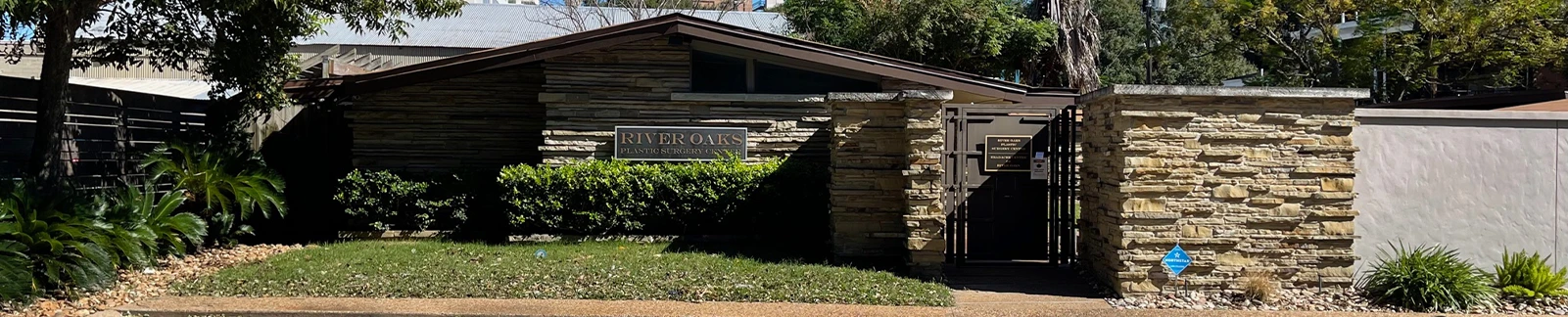
Dr. Carlton Perry’s practice is located in the heart of Houston, Texas at the River Oaks Plastic Surgery Center (2707 Ferndale).
Education
The University of Texas at Austin, Austin, Texas Degree: Bachelor of Business Administration
Oxford University:Oxford, England
Southern Methodist University, Dallas, Texas Degree: Masters of Business Administration
University of Texas Medical Branch, School of Medicine, Galveston, Texas Degree: Doctor of Medicine
Postgraduate Training in General Surgery:
St. Joseph Hospital General Surgery Program (UTHealth Houston affiliated) Houston, Texas
Oxford University: Oxford, England
Externship in Plastic Surgery, USC Plastic Surgery Dept.
Postgraduate Training in Plastic Surgery:
University of Oklahoma, Plastic Surgery Oklahoma City, Oklahoma
Fellowship including aesthetic rotation , Lennox Hill Hospital, New York City
Board Certified by American Board of Plastic Surgery
Post Fellowship:
Red Cross Hospital at Getafe Madrid, Spain
Clinica de Cirugia Plastica y Estetica Dr. Planas, Barcelona Spain
Instituto Europeo di Oncologia, Milan, Italy
The Governor’s Commendation, The State of Oklahoma
Board Certification
The American Board of Plastic Surgery
Former diplomate, The American Board of Surgery
Publications
Dr. Perry’s peer-reviewed research on chronic headache, listed newest first:
Co-author. Blake P, Nir RR, Perry CJ, Burstein R. Tracking patients with chronic occipital headache after occipital nerve decompression surgery: a case series. Cephalalgia. 2019;39(4):556-563. PMID: 30217120.
Co-author. Burstein R, Blake P, Schain A, Perry C. Extracranial origin of headache. Curr Opin Neurol. 2017;30(3):263-271. PMID: 28248698.
First author. Perry CJ, Blake P, Buettner C, Papavassiliou E, Schain AJ, Bhasin MK, Burstein R. Upregulation of inflammatory gene transcripts in periosteum of chronic migraineurs: implications for extracranial origin of headache. Ann Neurol. 2016;79(6):1000-1013. PMID: 27091721.
Dr. Perry is the first author of the 2016 Annals of Neurology study and a co-author of the 2017 Current Opinion in Neurology review and the 2019 Cephalalgia case series. Each title links to the free full text in PubMed Central, the U.S. National Library of Medicine’s archive of biomedical research.

Serious About Curing Your Head And Neck Pain?
We can help you discover if our life altering technique can do you for you what it has done for thousands. Reduce your head and neck pain! Call Us Today: (713)-522-8228
The proprietary pain survey, for head and neck pain is an industry leading game-changer in determining if our break-through pain relief procedures are right for your specific case.

Frequently Asked Questions
1. How do I find a surgeon who truly specializes in peripheral nerve decompression for head and neck pain?
Look beyond the phrase “migraine surgery.” The surgeon should be able to explain peripheral nerve anatomy, distinguish occipital neuralgia from other headache disorders, describe how candidates are selected, and show that the operation is tailored to the specific nerve rather than performed as the same package on everyone.
Ask how many occipital decompressions the surgeon performs, which nerves are commonly treated, how often frontal or temporal nerves are added, what the revision rate is, how failures are evaluated, and whether the surgeon works with neurologists, pain specialists, or other clinicians when the diagnosis is unclear. Experience with revision surgery, neuromas, prior stimulators, and post-traumatic nerve injury is especially relevant for complex patients.
Board certification and appropriate surgical training matter, but so does transparency. A good consultation should leave you understanding why you are — or are not — a candidate.
2. What questions should I ask before agreeing to nerve decompression surgery?
Ask the surgeon to name the nerve or nerves being treated and show you where they are. Ask what findings in your history and examination support that diagnosis, what alternatives remain, what improvement the surgeon thinks is realistic, and what symptoms may not change.
You should also ask: What exactly will be done to the nerve? Is the nerve preserved? Where are the incisions? What are the most common complications in this practice? How often is revision needed? How long until work and exercise? Who manages postoperative pain? What happens if the surgery only partly works? If I already have a stimulator, what is the plan for the hardware?
Finally, ask how the surgeon defines success. A percentage is not meaningful unless you know whether “success” means 50% improvement, complete pain freedom, reduced medication, or something else — and at what follow-up interval.
References
- Austen WG Jr, Remy K, Packowski K, et al. Refractory occipital neuralgia treatment with nerve decompression surgery: a case series. Front Neurol. 2023;14:1284101. PMID: 38090265. doi.org
- Remy K, Hazewinkel MHJ, Knoedler L, et al. Aetiologies of iatrogenic occipital nerve injury and outcomes following treatment with nerve decompression surgery. J Plast Reconstr Aesthet Surg. 2024;95:349-356. PMID: 38959621. doi.org
- Remy K, Hazewinkel MH, Mullen C, et al. Reoperation following Primary Greater Occipital Nerve Decompression Surgery: Incidence, Risk Factors, and Outcomes. Plast Reconstr Surg. 2025;155(1):159-166. PMID: 38589998. doi.org
If you’re tired of living with pain that nothing seems to fix, you’re not out of options. Start the Free Pain Survey or give us a call at 713.522.8228 we’re here to listen and help you explore whether nerve decompression surgery might finally make a meaningful difference.